6:30amSunrise
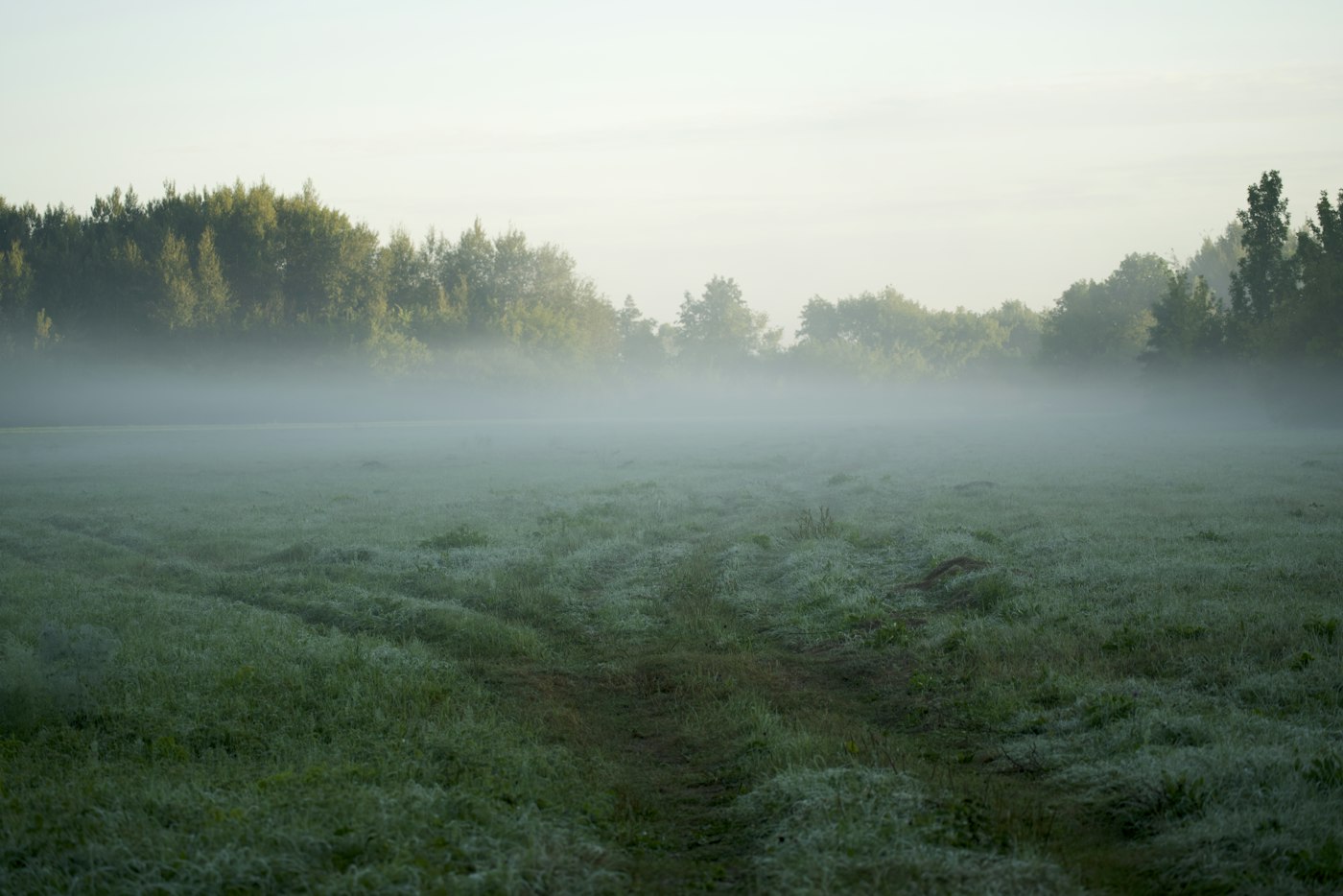
Turnout & sniff walk
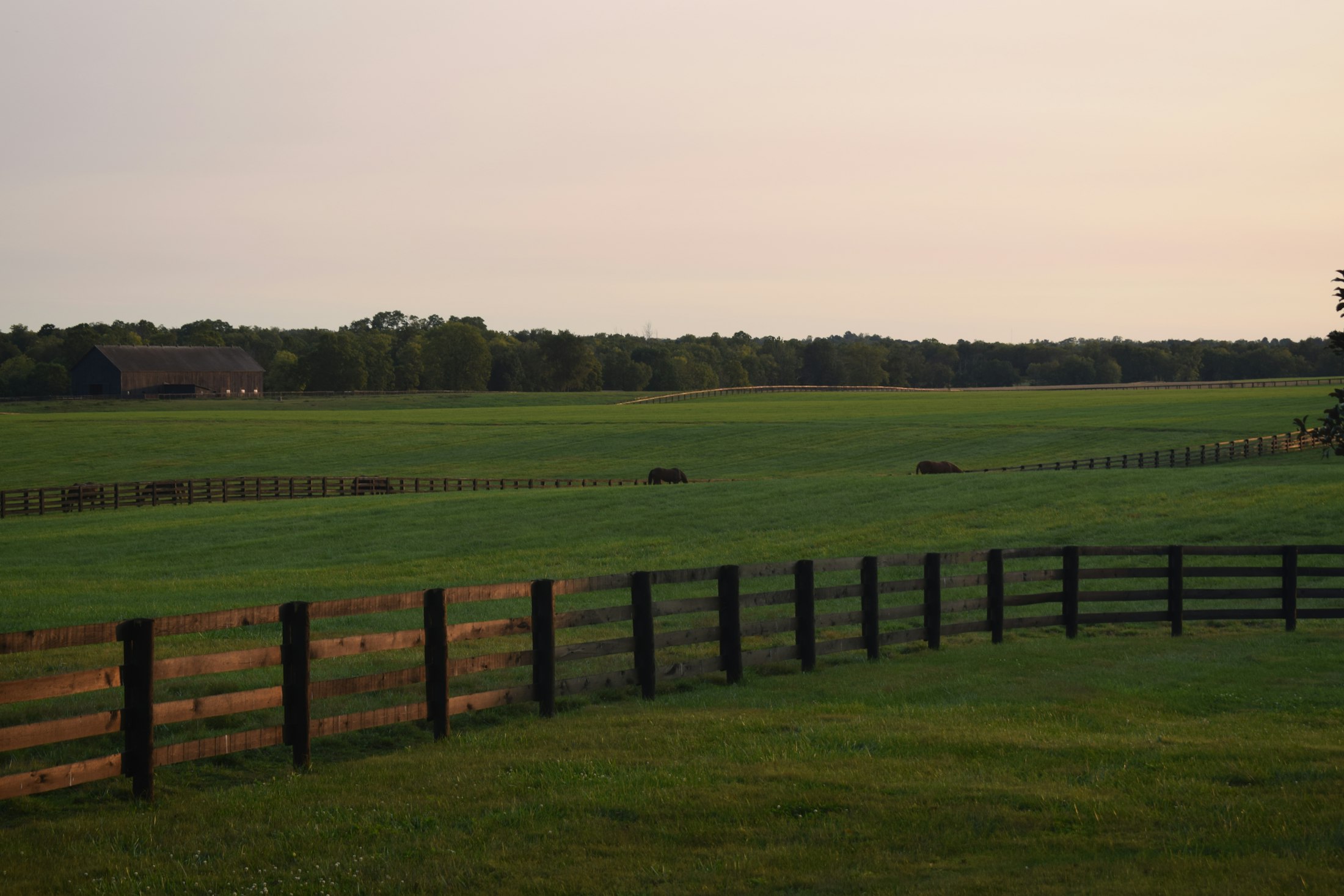
Everyone heads out to the dew-wet turnout field for a potty break and a slow, sniffy walk while the fog lifts off the pasture.
Cal does the first walk himself. He wants to see how every dog slept.
Your dog's day here is built around short training sessions, lots of real-world practice and plenty of rest. This is a typical Tuesday for a Manners & Freedom dog in week two.
Everyone heads out to the dew-wet turnout field for a potty break and a slow, sniffy walk while the fog lifts off the pasture.
Cal does the first walk himself. He wants to see how every dog slept.
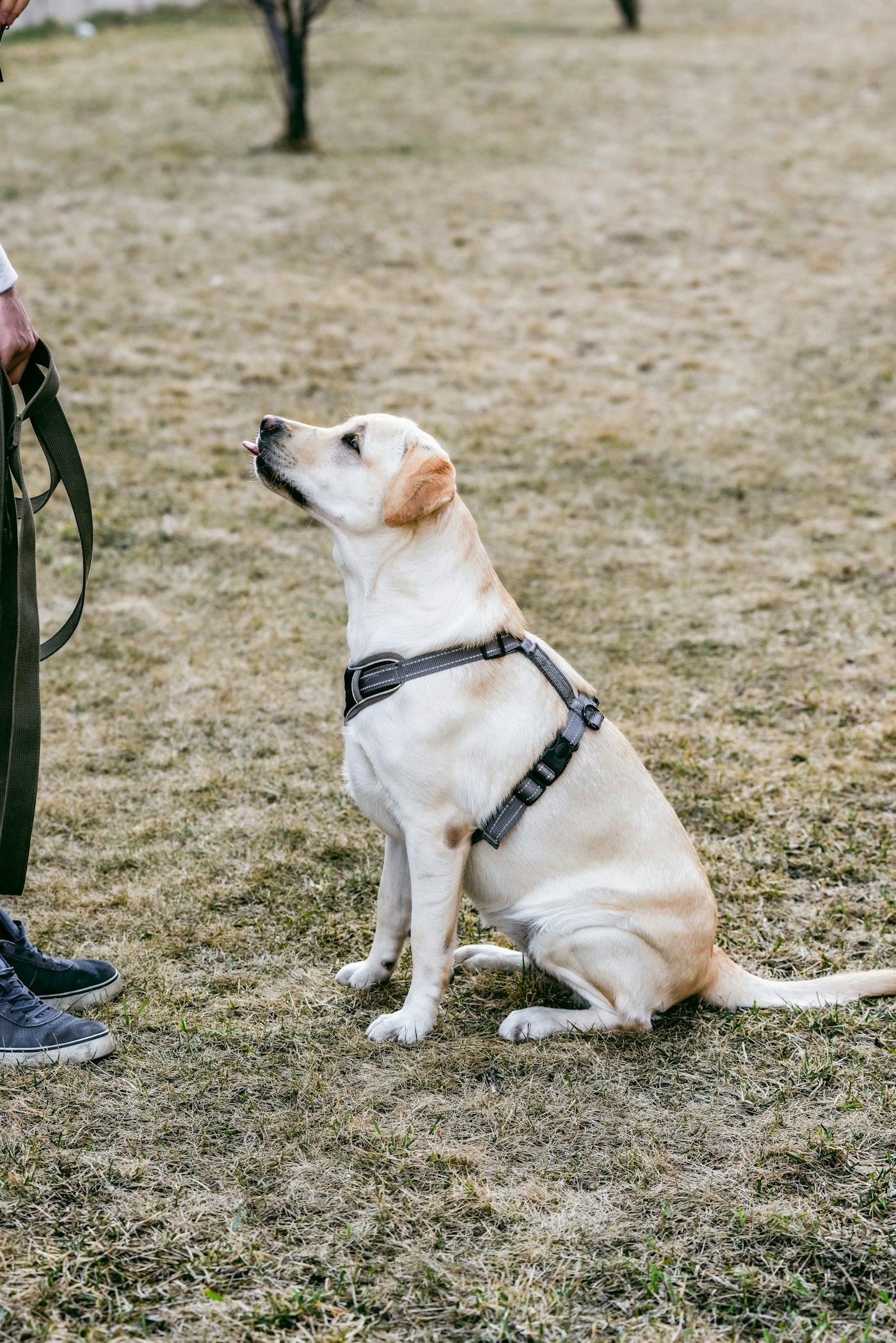
Part of each dog's breakfast goes into a short focus game: eye contact, name response, a calm sit at the kennel door. The rest goes in the bowl.
Food is our main currency here, so no meal goes to waste.
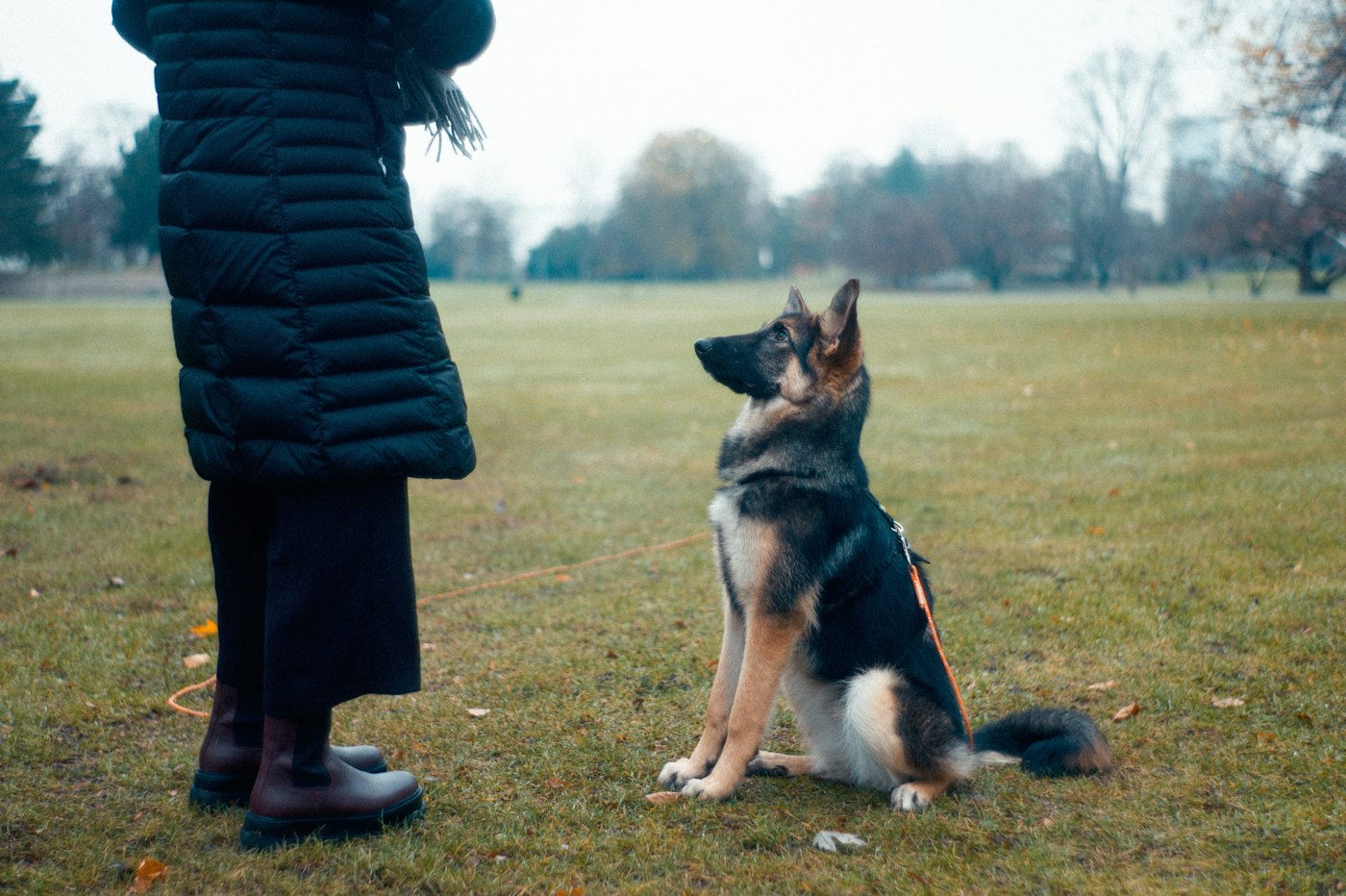
The day's main lesson, 20 to 30 minutes in the indoor arena. New skills are always taught with rewards first, in short, upbeat reps.
We stop on a win, never on a struggle.
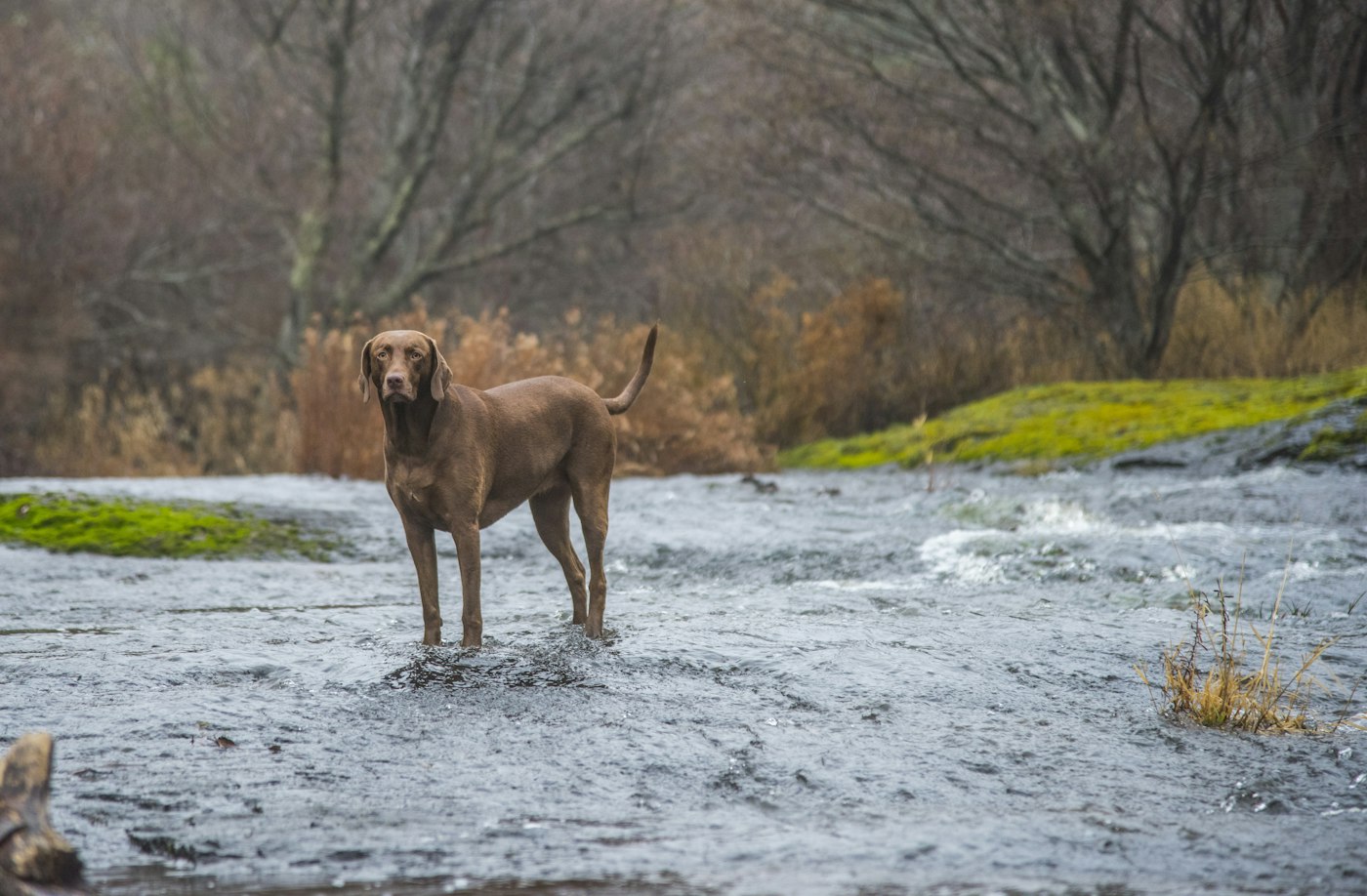
A long-line walk along Willow Creek. Water, mud, smells and wildlife make it real-world recall practice and good honest fun.
Tired, happy dogs learn faster in the afternoon.
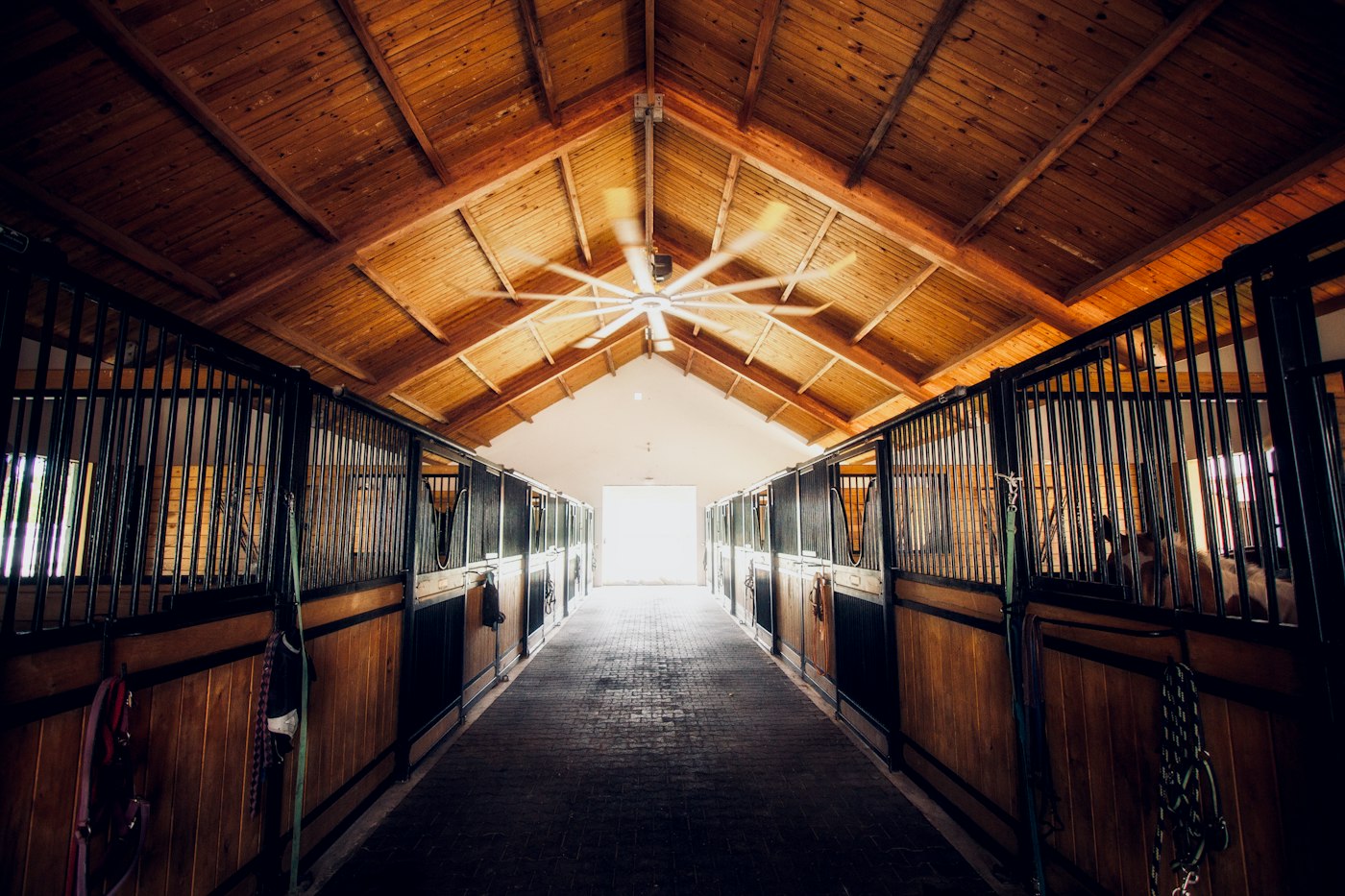
Back to a private, climate-controlled suite with a chew and some quiet music. Rest is when new learning settles in.
Many of our dogs sleep better here than they do at home. That's normal.
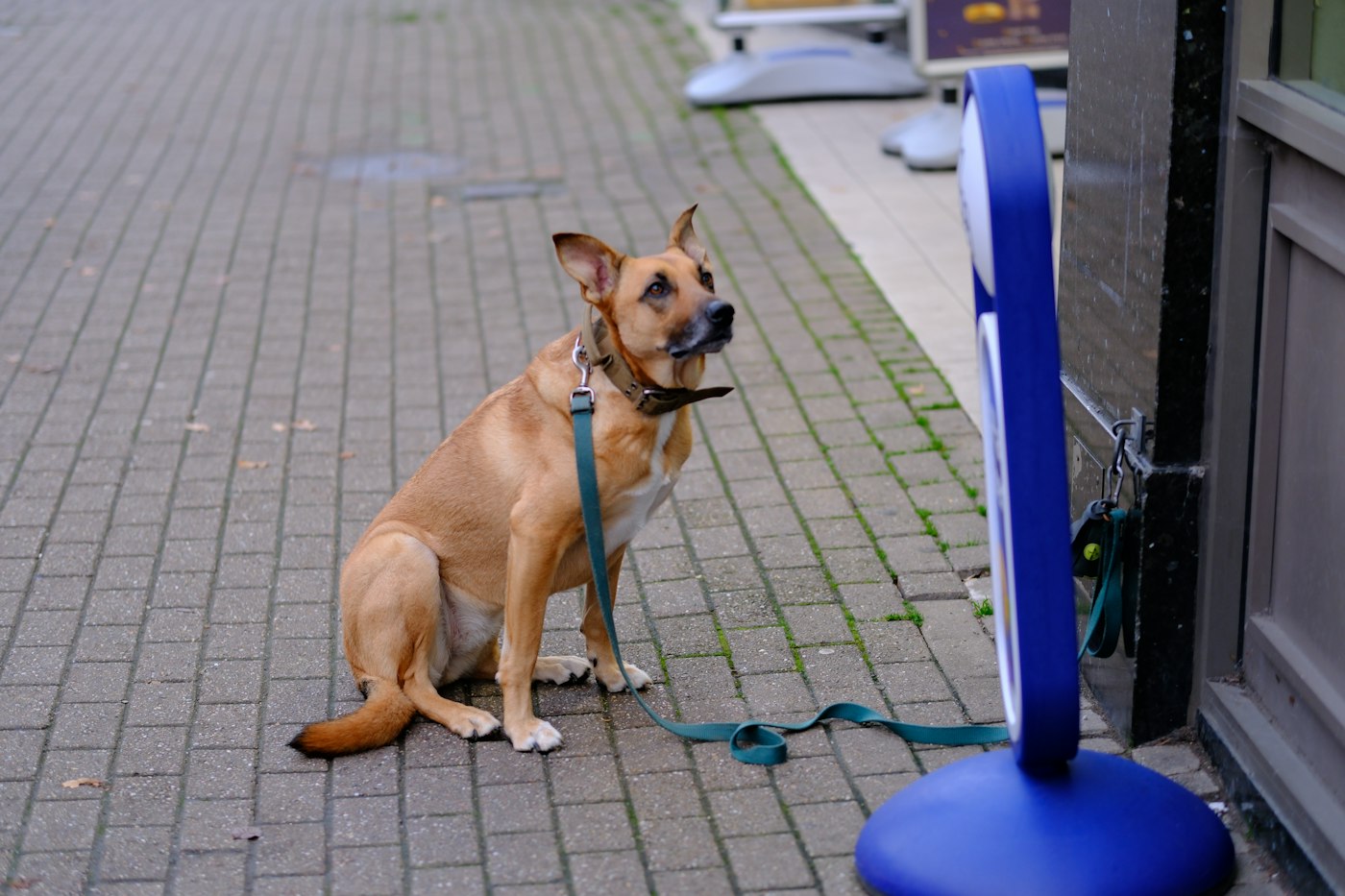
Leash manners where it counts: the feed store, the hardware store's front porch, a bench outside the coffee shop, passing strollers and trucks.
Real life is the final exam, so we practice for it every day.
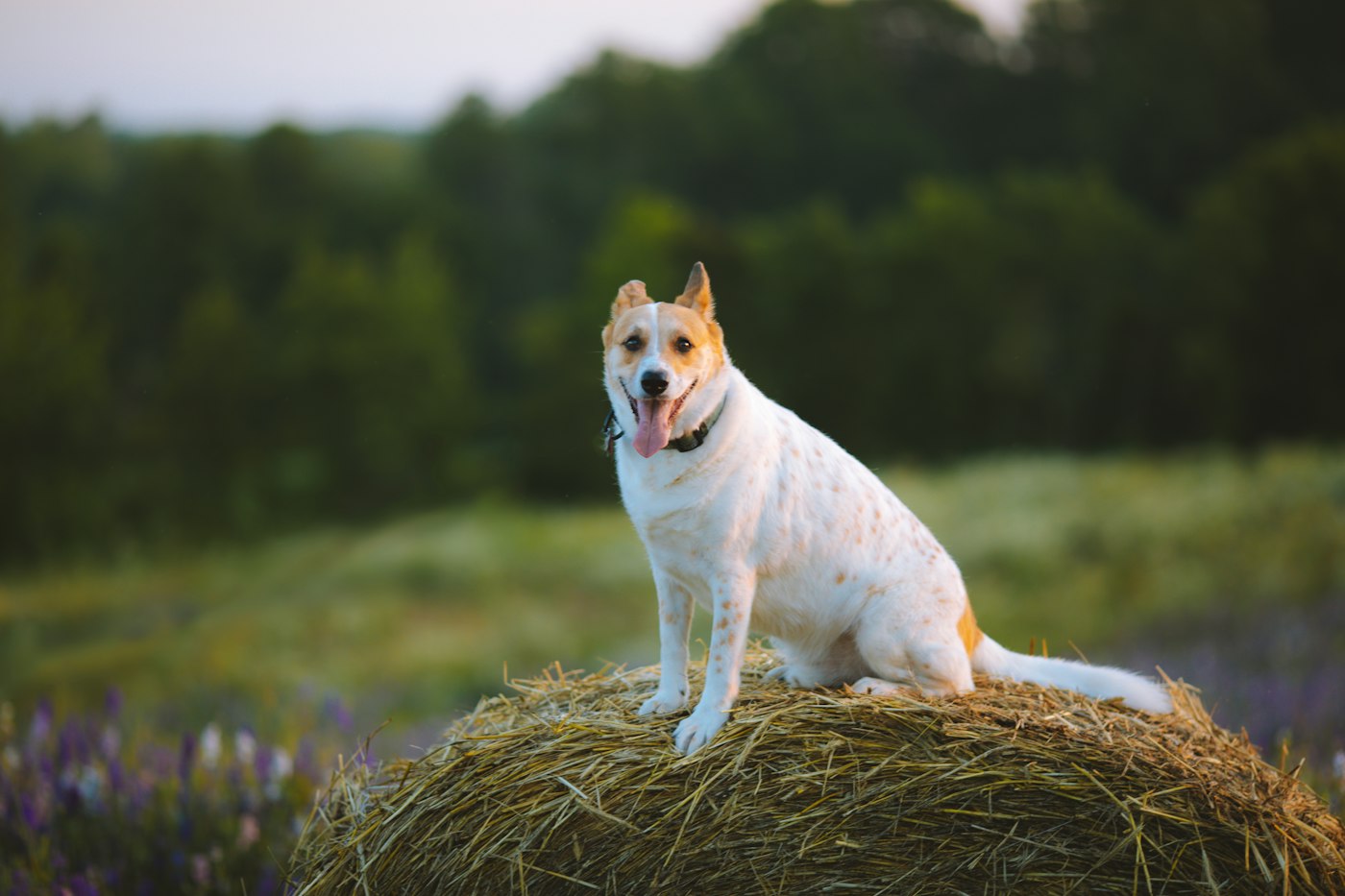
Sits and downs beside the horse paddock, recalls past the hay wagon, a place cue on a bale while the tractor rumbles by.
Once a dog clearly understands a skill, we add calm, fair feedback here.
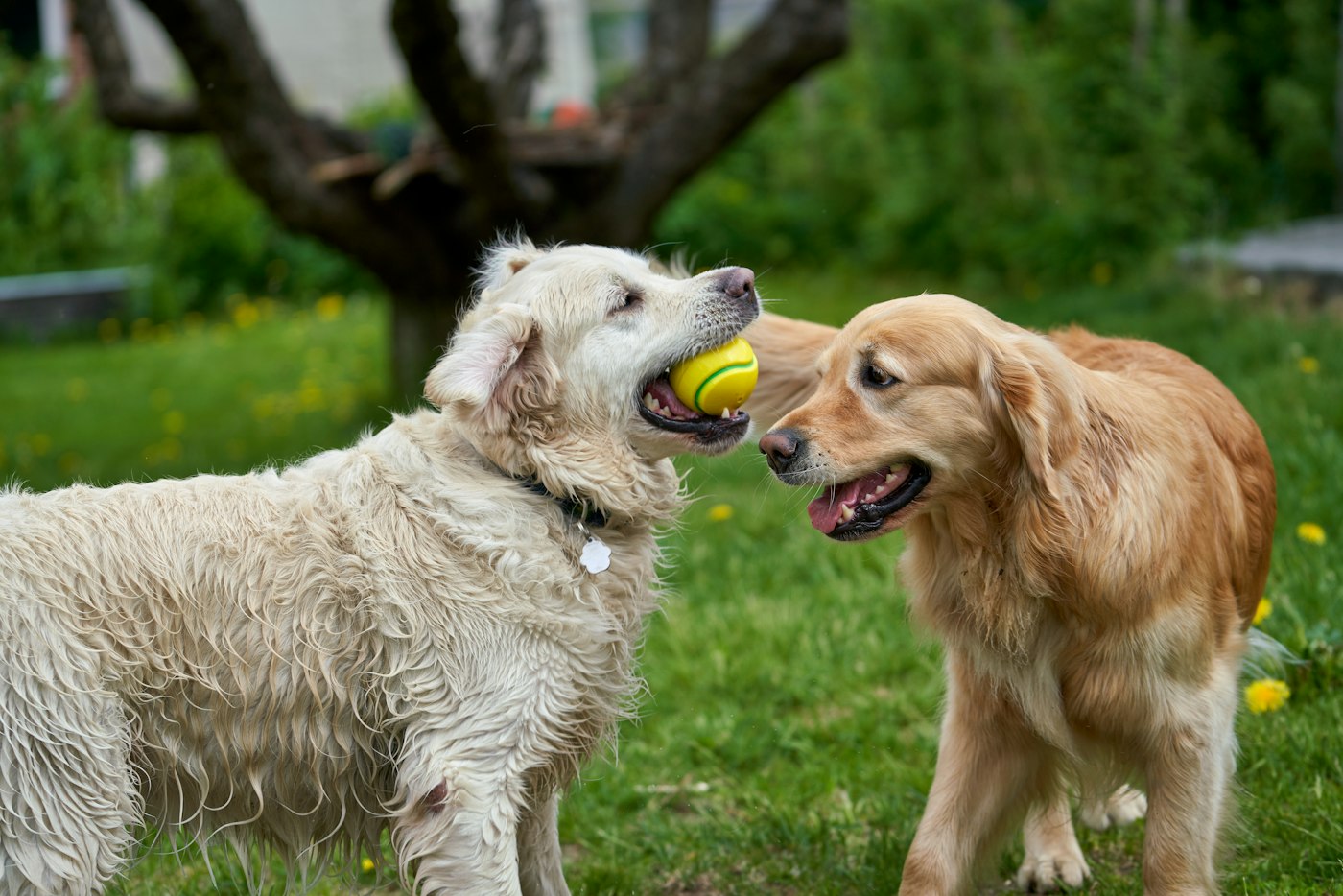
Small playgroups of two to four dogs, chosen by size and play style and supervised the whole time. Some dogs prefer a game of fetch with a trainer, and that's fine too.
Play is a reward, and also a lesson in manners.
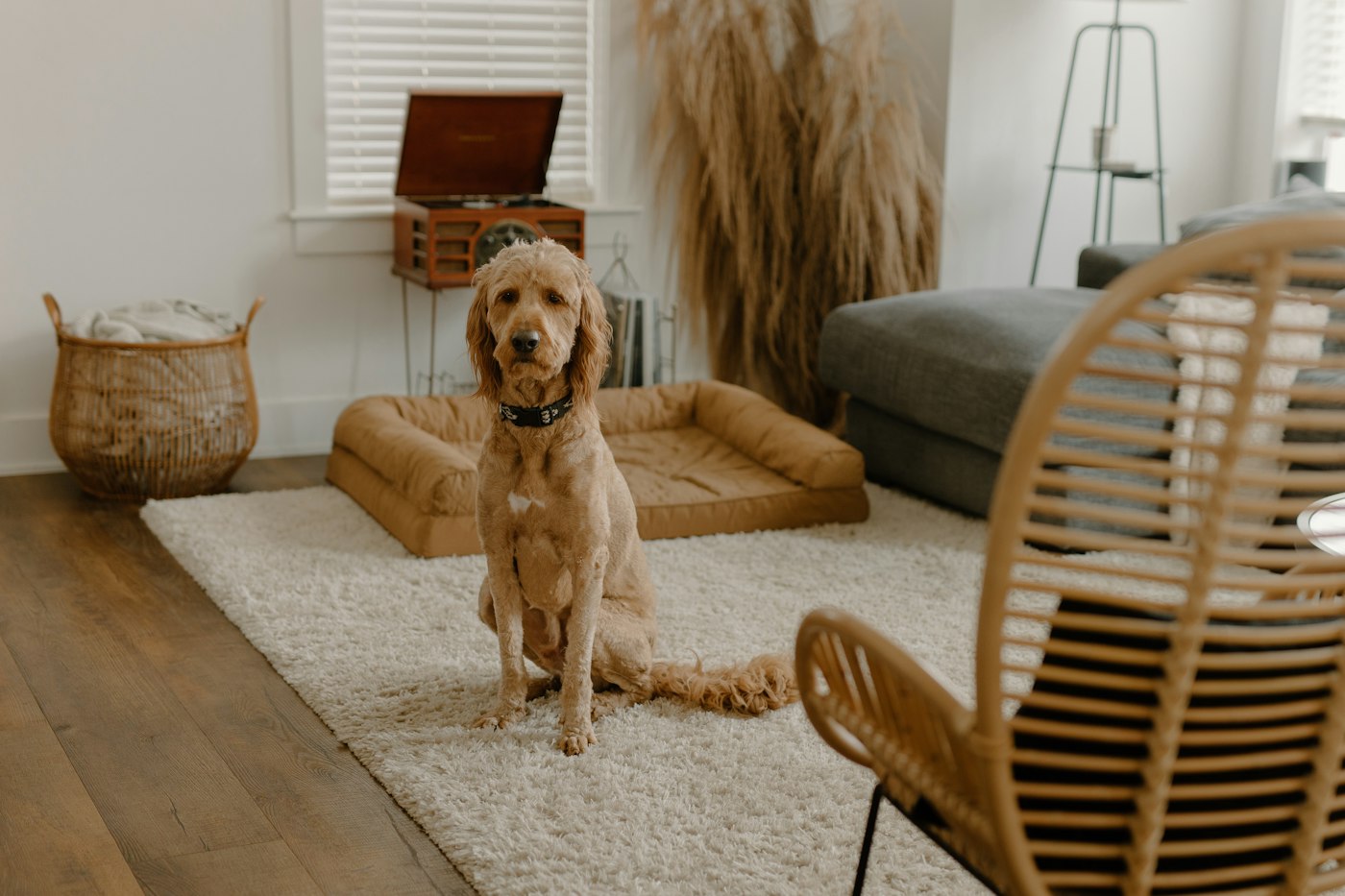
A real living room and kitchen: waiting at doors, staying off the counters, settling on a bed while someone cooks, being calm when the doorbell rings.
Most of your dog's life happens inside, so we train inside too.
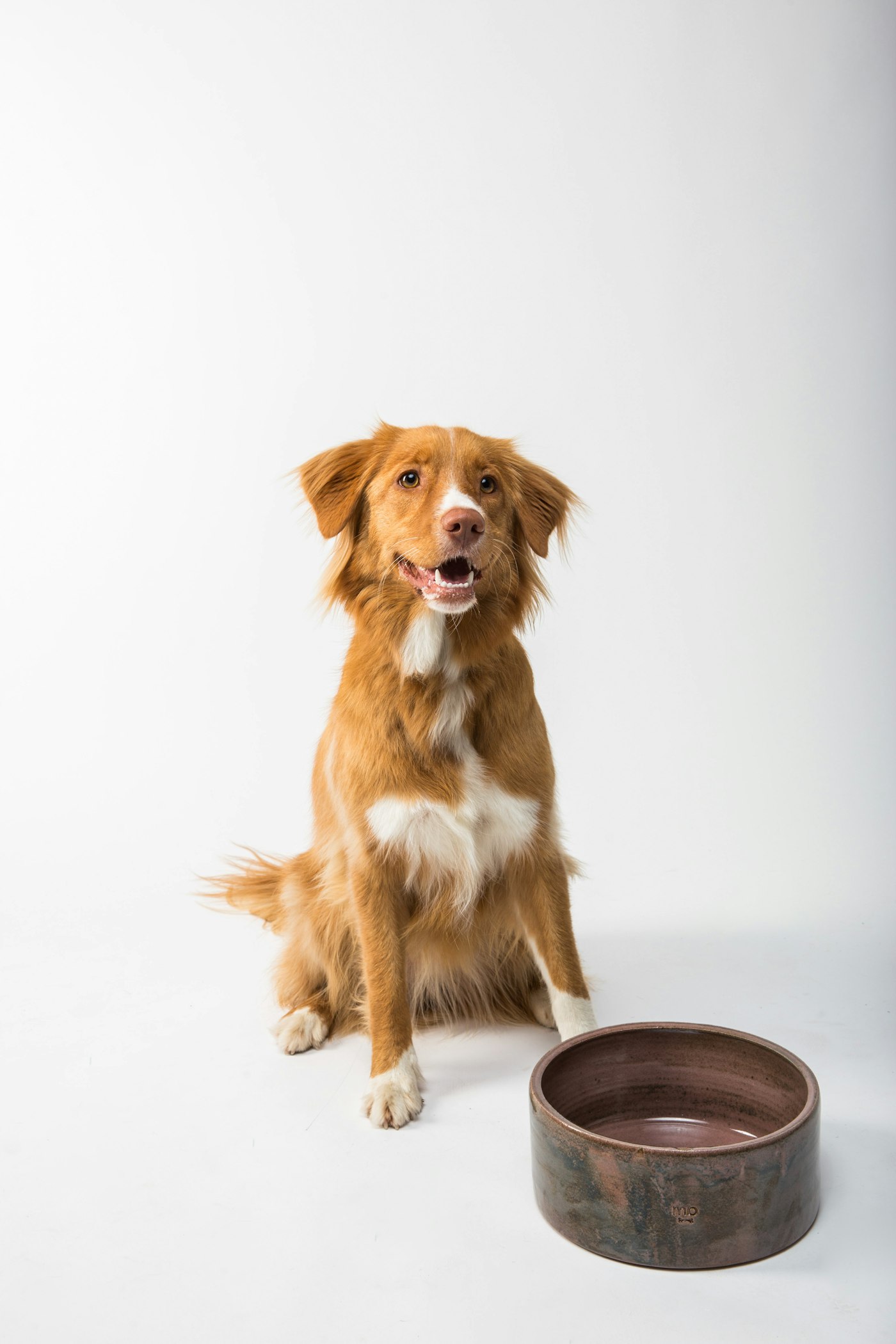
Dinner, a potty walk and a cool-down stroll. Puppies get one more short session, and older dogs head toward an early night.
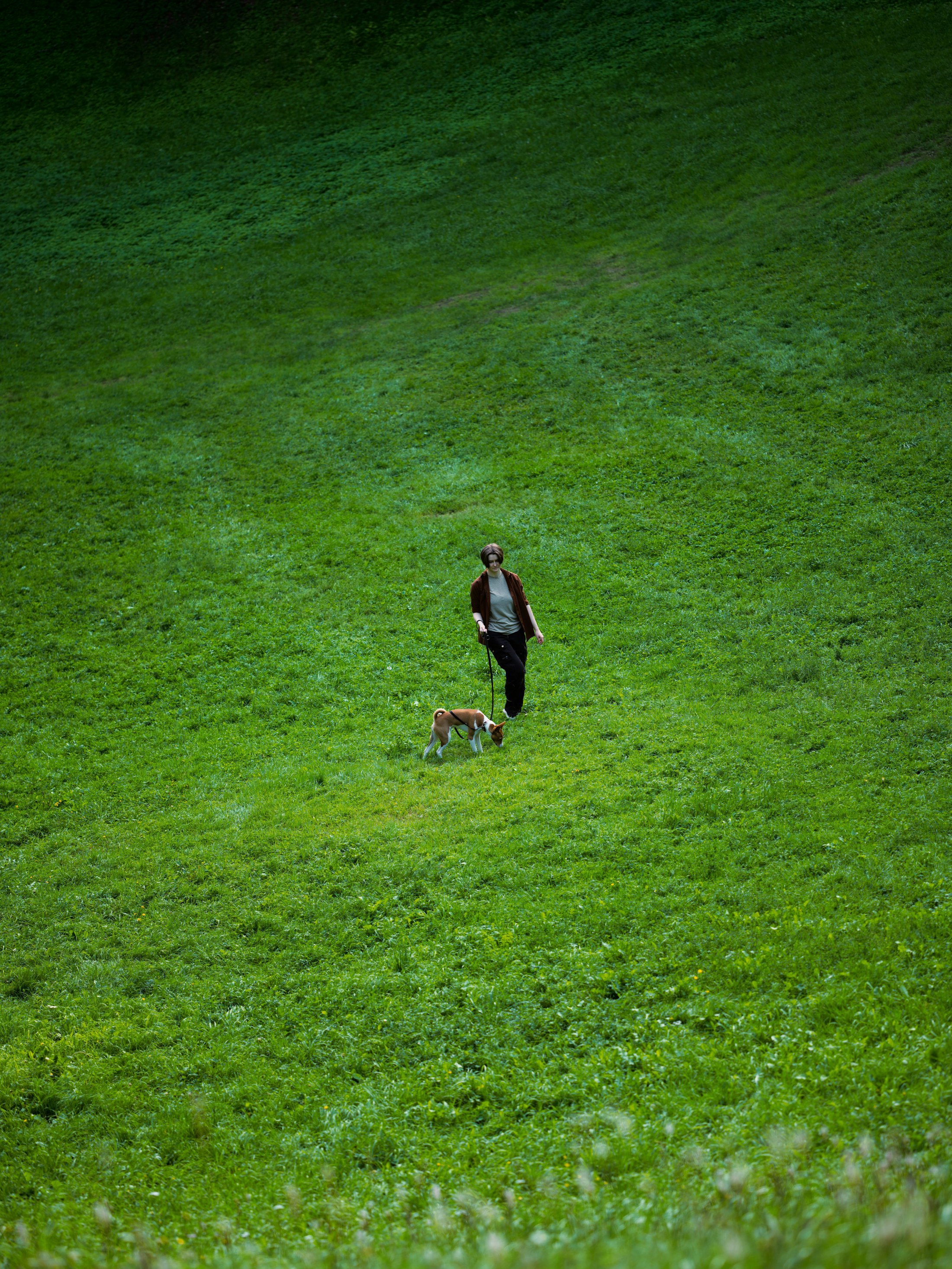
A relaxed loose-leash walk down the fence line as the sun drops behind the barn. This is the walk we teach you at go-home.
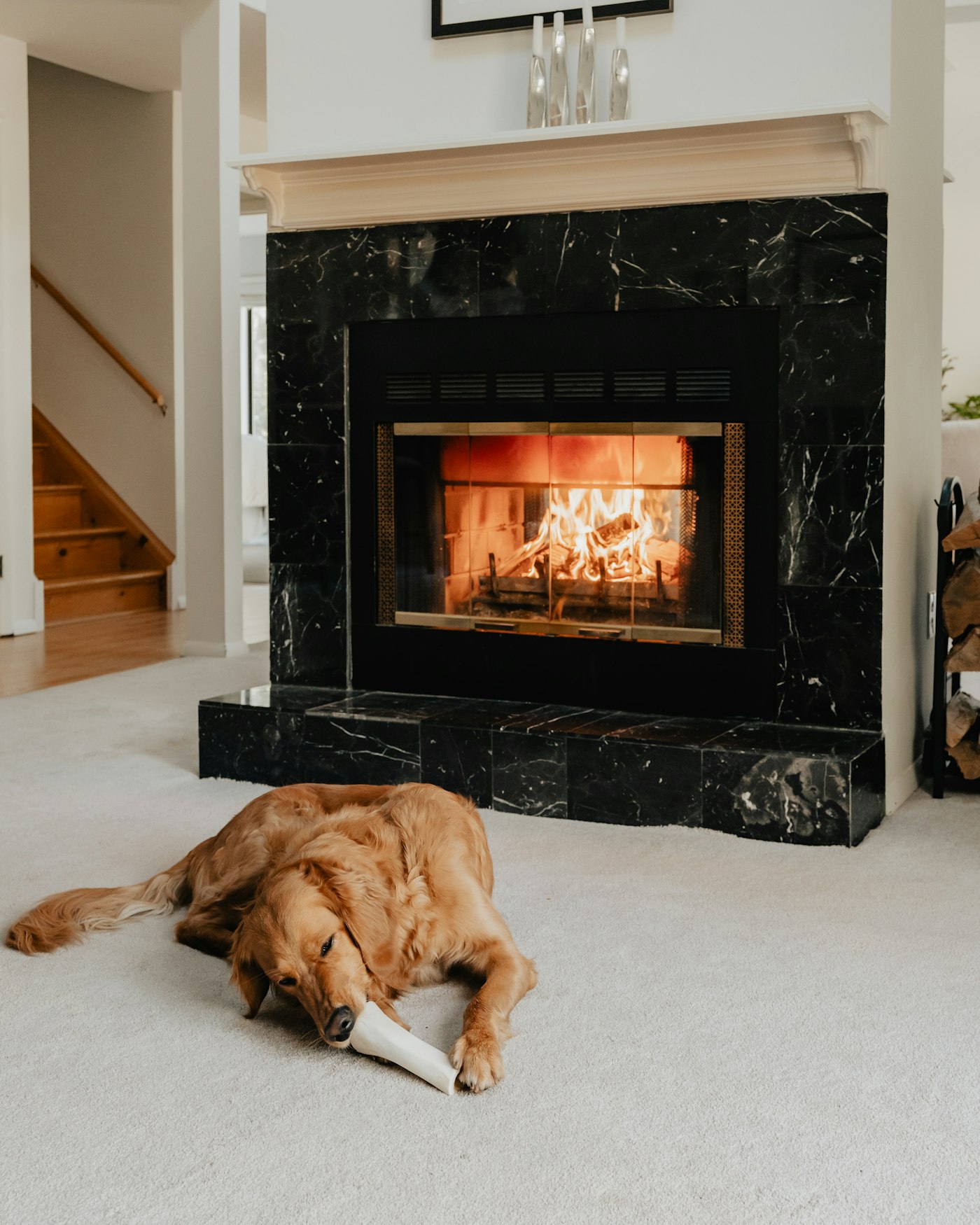
Your trainer sends the day's clips and a short note: what clicked, what's next, and a photo of your dog doing absolutely nothing.
Families tell us this is the best part of their day.
Last potty break, lights low, and night checks by Cal and Hannah, who live on the property.
We're 200 steps from the kennel barn, all night.
Each day builds on the last. By week two, the field trip gets busier and the distractions get bigger.
See the programs →Every evening around 7:30 your trainer sends a short video and a note. You'll see the good reps, the not-yet reps and the naps. Once a week you also get a written report card that rates each skill and lists the plan for next week.
You're welcome to visit during week two. Most families find it's the moment they start to believe it's working.
The schedule is a plan, not a rule. Rosa and your trainer log these every day, and they shape tomorrow's plan.
Did your dog finish breakfast and supper? A skipped meal changes the plan before anything else.
Settling time and restlessness overnight, logged at every night check.
Lip licks, yawns, avoidance, shutting down. If we see them, we slow down and lower the difficulty.
A quick nose-to-tail check after the creek and field trips: pads, ears, coat and any soreness.
Who your dog enjoys, who they'd rather avoid. Playgroups are matched again each day.
Every day ends with at least one thing your dog got right. That clip is usually the one we send you.
Every evaluation includes a walk through the kennel barn, the training barn and the farmhouse classroom.